Free Astrology Chart Calculator: Build Yours Instantly
A free astrology chart calculator turns three pieces of information about your birth into a personal natal chart: the date, the exact time you were born, and the city or town where it happened. Within seconds, the tool calculates the positions of the Sun, Moon, and planets across the twelve zodiac signs and houses, giving you a snapshot of the sky at the moment you took your first breath. Astrologers use this chart to describe personality patterns, emotional wiring, strengths, blind spots, and life themes.

If you've never generated a chart before, the experience can feel overwhelming. Symbols, degrees, aspects, and unfamiliar terminology crowd the page. This guide walks you through what a chart calculator actually does, what you need to provide, how to interpret the main sections, and which free tools deliver reliable results.
What a Free Astrology Chart Calculator Actually Does
Behind every chart calculator is a set of astronomical tables called ephemerides, which list planetary positions for any given date and time. The calculator takes your inputs, looks up the planetary coordinates, and maps them onto a circular diagram divided into twelve signs and twelve houses.
The Three Inputs You Need
- Birth date: day, month, and year. This sets the sign positions for all planets and the Sun.
- Birth time: as precise as possible. Even a difference of an hour can shift the Moon sign or the house cusp positions. A birth certificate is the most accurate source; family memory is a workable second choice.
- Birth location: city or town. This determines your geographic coordinates and therefore the precise horizon line used to calculate the Ascendant (rising sign) and house divisions.
What the Calculator Produces
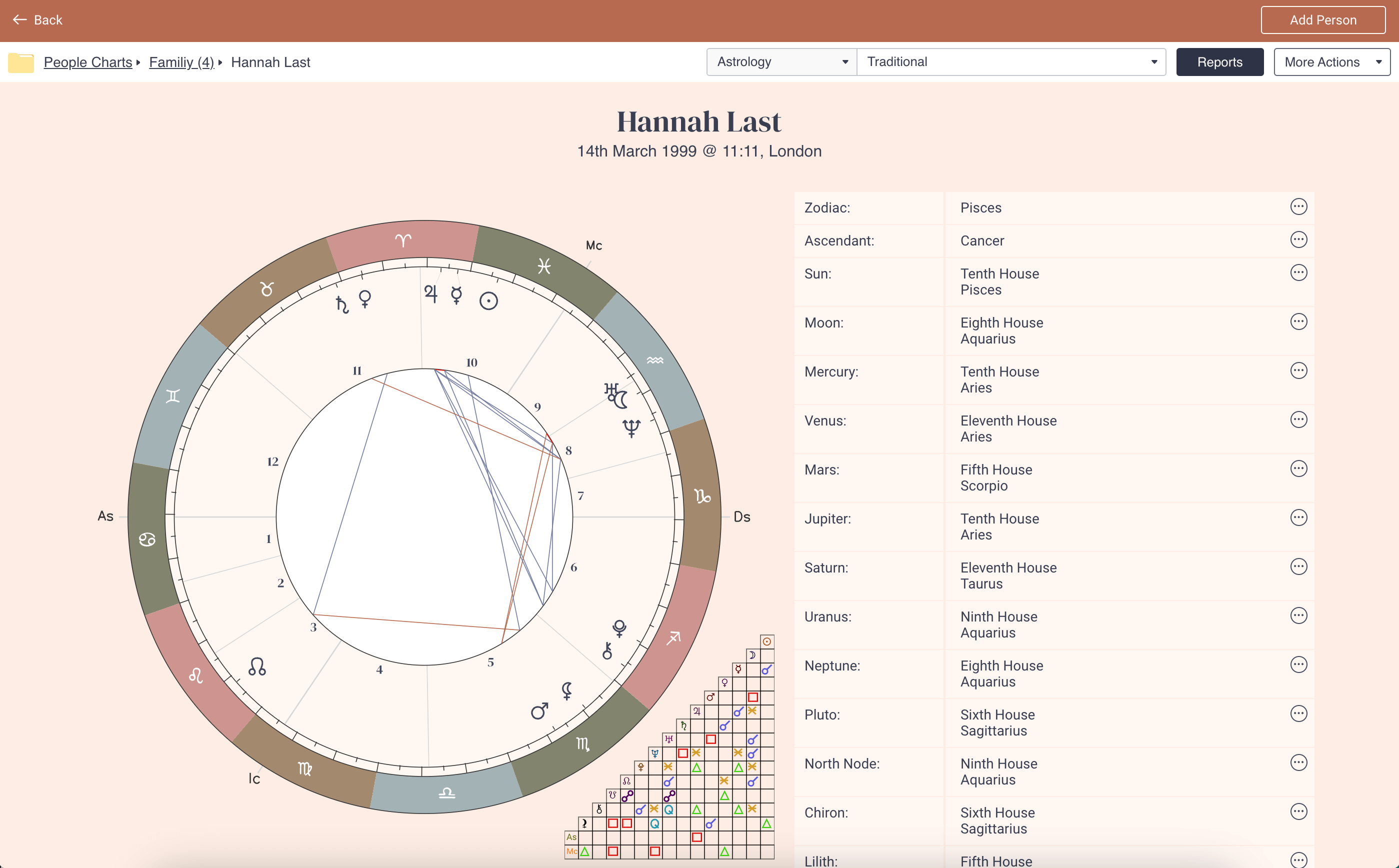
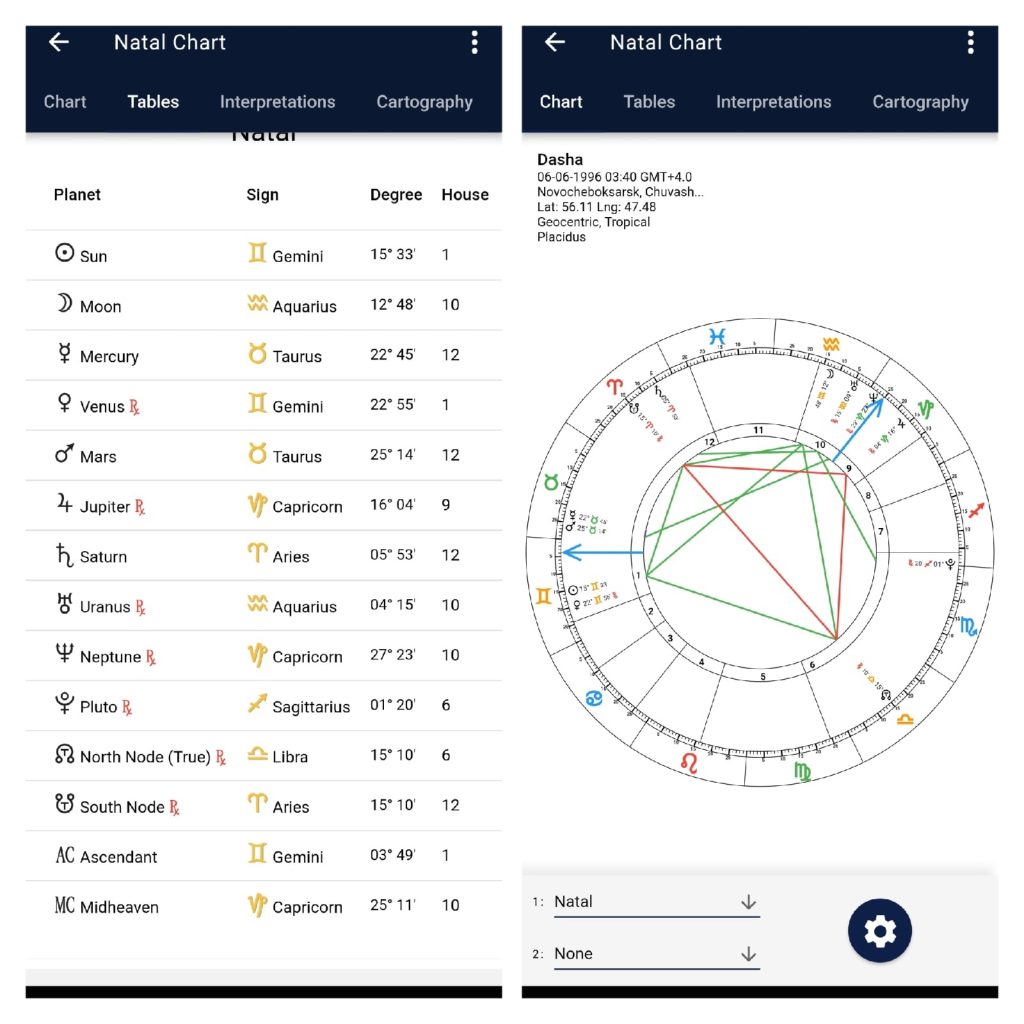
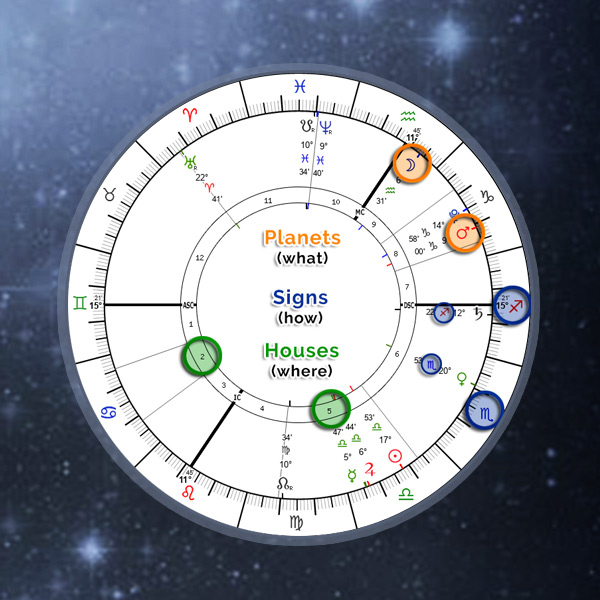
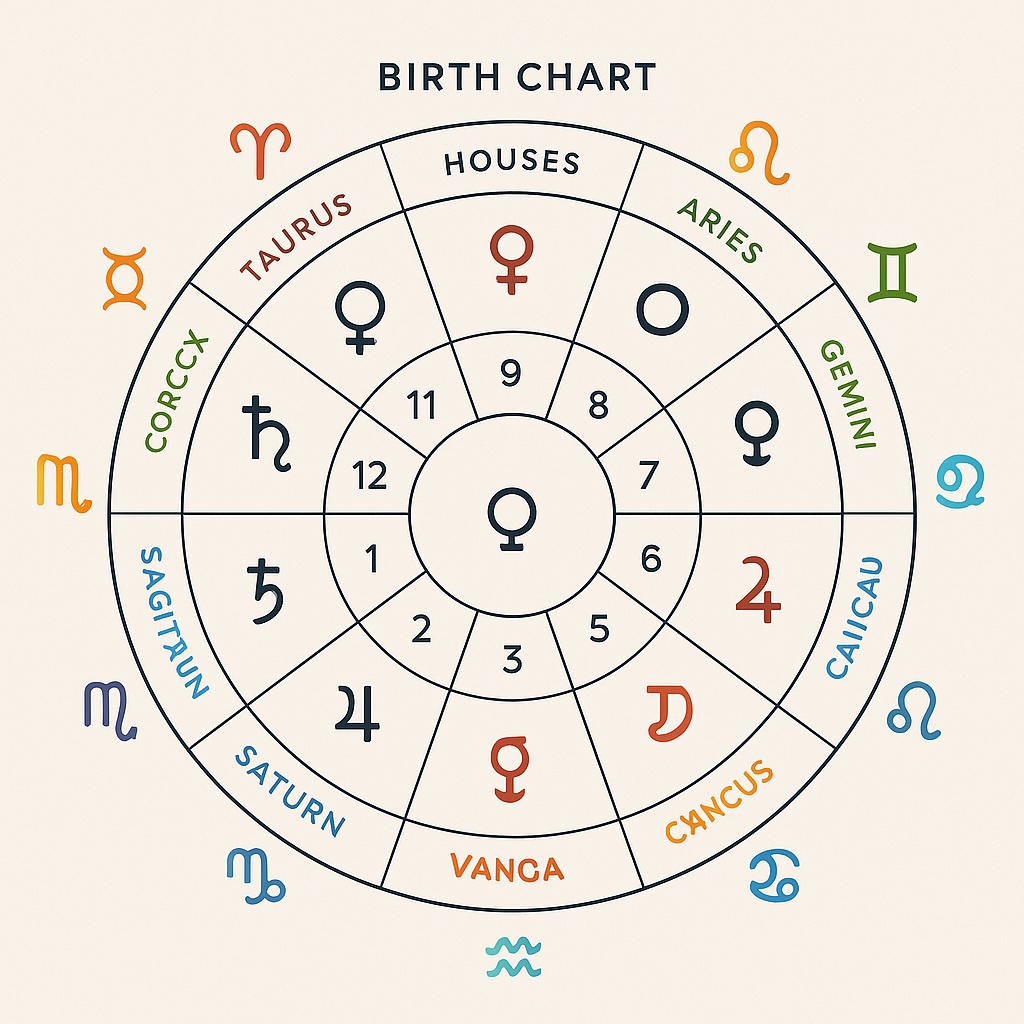
Most calculators generate a chart wheel, a table of planetary positions, and a short list of major aspects. The wheel shows the twelve houses as pie slices; the table lists each planet, the sign it occupies, its degree, and the house it rules within your chart. Aspects are the angular relationships between planets, such as conjunction (0°), opposition (180°), trine (120°), and square (90°), and they describe how different parts of your personality interact.
How to Read Your Chart in Five Steps
A natal chart looks dense at first, but a simple sequence makes it readable. Start with the big three, then layer the details.
- Read the Sun sign: your core identity, ego, and the qualities you are developing in this lifetime.
- Read the Moon sign: your emotional needs, instinctual reactions, and what makes you feel safe.
- Read the Ascendant (Rising sign): the mask you wear socially, your appearance, and how you approach new situations.
- Scan the planetary placements: Mercury (communication), Venus (love and values), Mars (drive and conflict style), Jupiter (growth and luck), Saturn (discipline and limits), Uranus (innovation), Neptune (imagination and dissolution), and Pluto (transformation).
- Look at the aspects: tight conjunctions, oppositions, and squares are the loudest themes. Trines and sextiles are supportive talents.
Skipping straight to Mercury retrograde forecasts or asteroid placements will feel random without this foundation. The five-step order keeps the chart coherent.
What Houses Reveal
Signs describe how a planet expresses itself; houses describe where in life that expression shows up. The first house is self and body, the second is money and values, the seventh is partnerships, the tenth is career and public image, and so on. A Moon in Cancer in the fourth house points to a deep emotional connection with home and family. The same Moon in the tenth house shows emotional energy poured into career and public roles.
Different chart calculators use different house systems. Placidus is the most common in Western astrology; Whole Sign and Equal House are popular in Hellenistic and some modern traditions. The choice rarely changes your Sun sign, but it can shift which house a planet falls into.
Best Free Astrology Chart Calculator Options
Not all calculators are equal. A good free tool produces an accurate wheel, lists positions to the nearest minute of arc, and offers at least a brief interpretation. The following are widely used and reliable.
Astro.com
Run by Astrodienst, this is the most respected free resource. It offers extended chart selection (natal, transit, solar return, composite, and more), draws the chart in multiple house systems, and provides a free short interpretation when you create an account. The downside is a busy interface that takes a few minutes to learn.
Cafe Astrology
Cleaner layout, faster results, and a useful free natal chart report with paragraph-length interpretations for each planet, aspect, and house. Less customizable than Astro.com, but friendlier for a first chart.
Astro-Charts
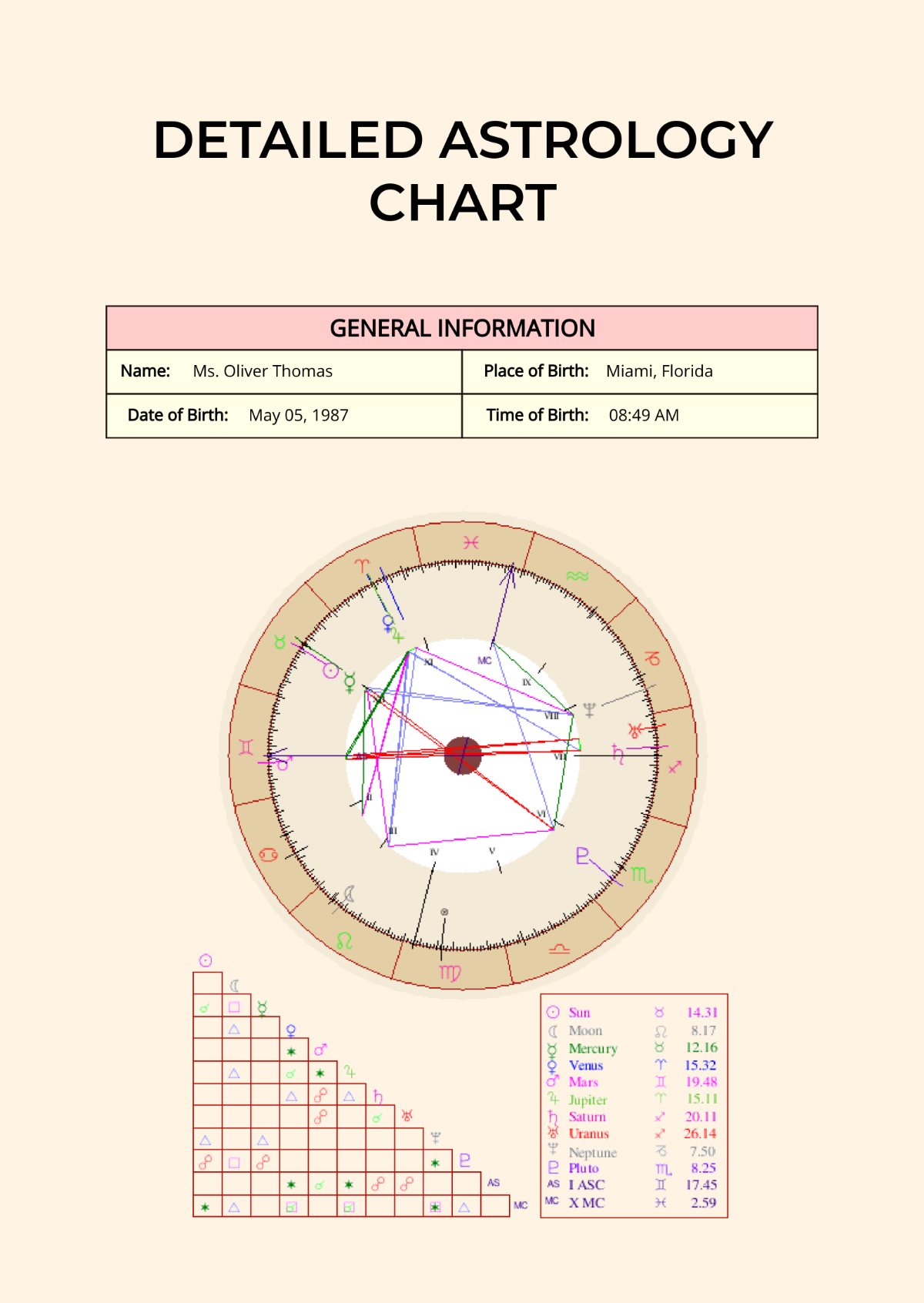
Generates a sharp visual wheel with clickable elements. Hovering over a planet reveals the sign, degree, and house; clicking opens a short description. Good for sharing chart images on social media.
Co-Star and TimePassages
Mobile-first apps with polished design. Free tiers produce a full natal chart plus daily transits. They push subscription features, but the chart itself is unlocked.
For pure calculation accuracy, Astro.com is the standard. For a smoother first-time experience, Cafe Astrology or Astro-Charts are easier entry points.
Common Mistakes When Using a Free Chart Calculator
Rounding your birth time
If you only know you were born "around 3 p.m." and you enter 3:00, the Ascendant and Moon could be off by a sign. Use the exact minute when possible. If the time is genuinely unknown, choose the "no birth time" option; the calculator will produce a solar chart focused on Sun-sign themes instead of houses.
Confusing Sun signs with the whole chart
A horoscope column addresses Sun signs only. Your natal chart is far more layered. Two people born on the same day in the same city will have similar Sun signs but different rising signs, house placements, and aspects.
Treating one aspect as a verdict
A square between Mars and Saturn does not doom you to frustration; it describes a tension that, worked with consciously, builds resilience. Single-aspect readings are usually reductive.
Privacy and Data Handling
Most calculators store your birth data to generate and save your chart. Reputable tools let you delete your data; check the privacy policy before signing up. Avoid services that require credit card details for what is advertised as a free chart.
Going Deeper After Your First Chart
Once you've generated a chart and read it with the five-step method, you can layer more advanced techniques:
- Transits: the current positions of the planets overlaid on your natal chart, used to time decisions and understand seasonal themes.
- Progressions: a symbolic day-for-a-year movement that points to inner development.
- Solar returns: a chart cast for the moment the Sun returns to its natal position each year, used for birthday-year themes.
- Synastry and composites: two-chart comparisons for relationships.
Each of these uses the same basic data and many of the same free calculators. You don't need paid software until you reach professional study level.
Final Thoughts
A free astrology chart calculator is one of the best entry points into practical astrology. Three inputs, less than a minute of processing, and you have a working map of the sky at your birth. Start with a reputable tool, give it the most accurate birth time you can find, and read the chart in the order described above: Sun, Moon, Ascendant, planets, then aspects. The chart won't predict your future, but it will give you a precise language for patterns you've already noticed in yourself. From there, transits and progressions add a time dimension, and the rest of the craft opens up at your own pace.