New York Workers Comp Forms: Complete 2025 Guide
If you were hurt on the job in New York, the right paperwork protects your paycheck, your medical care, and your legal rights. The state uses a specific set of New York workers comp forms published by the Workers' Compensation Board (WCB), and missing a deadline or filing the wrong version can delay benefits for weeks. Below are the forms you'll actually use, who fills them out, and the deadlines that matter.
The Essential New York Workers Comp Forms
The WCB maintains dozens of forms, but most claims move through a handful of core documents. Start with these, and add others only when your situation calls for them.
Form C-2: Employer's Report of Work-Related Injury
- Who files it: The employer or the employer's insurance carrier.
- Deadline: Within 10 days of learning about the injury. If the injury causes disability beyond the day of the accident, the employer must file within 8 days.
- Where to file: Submitted to the WCB by the employer/insurer, not the worker.
- Why it matters: This is the official trigger that opens the claim in the Board's system. Without it, even a clearly injured worker has no claim number to attach bills to.
Form C-3: Employee Claim for Compensation
- Who files it: The injured worker.
- Deadline: Within 2 years of the accident (or within 2 years of the date you should have known the injury was work-related for cumulative or occupational cases).
- Where to file: Mailed or filed electronically with the WCB. A copy goes to your employer and the insurer.
- Why it matters: The C-3 is your formal request for benefits. Be specific about body parts, dates, and how the injury happened; vague descriptions are the top reason insurers dispute claims.
Form C-4: Employer's Notice and Proof of Claim for Compensation
Filed by the employer only if the worker fails to file a C-3 and the employer wants to keep the claim active for disability payments. Rare in practice, but worth knowing it exists.
Form C-8.1: Authorization for Medical Treatment (DB-450)
The treating doctor's report, including diagnosis, treatment plan, and functional limitations. Insurers often pre-authorize the first visit on a C-8.1, so keep yours in a safe place.
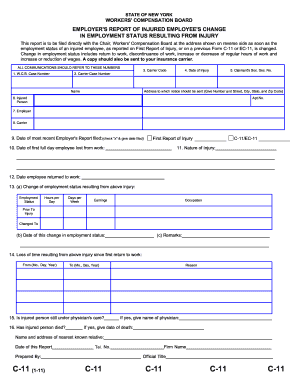
Form C-11: Claimant's Notice of Hearing
Tells you when and where your WCB hearing will be held, and lets you confirm whether you want a hearing. Always confirm. Missing a confirmed hearing can mean an automatic denial.
Form C-32.1 / C-32.2: Disputed Claims
Used when the insurer contests the claim or specific issues (causal relationship, degree of disability, average weekly wage). The number changes depending on the dispute type.
Step-by-Step: How to File a New York Workers Comp Claim in 2025
Here's the order that actually works for most injured workers in New York.
- Get medical care first. Tell every provider the visit is work-related. The doctor's notes and the C-4 become the medical backbone of the C-3 you file later.
- Notify your employer in writing. Verbal notice is not enough on its own. Email, text, or a dated letter creates a paper trail.
- Wait for the C-2 from your employer. Ask the HR or safety contact to confirm submission. Note the claim number when assigned.
- File Form C-3. Use the WCB's eForms portal or the printable PDF. Attach medical evidence where helpful; the WCB does not require copies at filing, but keep originals.
- Respond to Form C-11 hearing scheduling. Confirm attendance within 10 days of the notice. Mark the calendar.
- Track benefit payments. If accepted, the insurer pays wage replacement (two-thirds of your average weekly wage, capped) and approved medical bills.
Deadlines That Actually Matter
Missing these windows is the most common reason valid claims get denied.
- Injury reporting to employer: As soon as possible. NY has no hard written number of days, but waiting weeks creates dispute risk.
- C-2 from employer: 10 days (8 days if disabled).
- First medical treatment: Within 48 hours is the practical target for clean claims.
- C-3 from worker: 2 years from injury or from date of knowledge for occupational disease.
- Appeals of WCB decisions: 30 days from the decision notice to request review by the Workers' Compensation Board panel, then 4 months to appeal to the Appellate Division.
Where to Download the Official Forms
Always pull forms directly from the Board. Third-party sites often host outdated versions, and the WCB quietly retires old PDFs each year.
- Official WCB forms page: wcb.ny.gov under "Forms" in the main navigation.
- eForms portal: Allows online filing with a NY.gov login, useful for the C-3 and many follow-up documents.
- In person: Any WCB district office can print and help you complete forms on the spot.
Common Mistakes That Delay Benefits
Even strong claims stall on avoidable mistakes.
- Wrong body part listed. If the C-2 says "back pain" and your C-3 says "left leg," the insurer may deny the leg injury as unpreserved. Match the descriptions carefully.
- Skipping the doctor's restrictions note. Form C-4 must list work restrictions. Without it, light-duty job offers look like normal work and benefits get cut.
- Missing independent medical exams. If the insurer schedules an IME under Section 32, attend. Skipping it results in an automatic suspension of payments.
- Working without clearance after the injury. Returning before the doctor releases you can collapse a valid claim into a wage dispute.
When You Need a Lawyer (and When You Don't)
For straightforward injuries, a worker can self-file the C-3 and most follow-up documents. Consider legal help if:
- The insurer denies the claim or disputes causation.
- Your injury involves long-term disability, surgery, or significant wage replacement.
- You receive a Section 32 lump-sum settlement offer.
- The case has escalated to a WCB hearing.
New York restricts attorney fees in workers' comp cases: counsel typically takes 9% of disputed indemnity benefits or a court-set fee, so the cost is lower than in other injury practice areas.
Special Forms for Specific Situations
A few scenarios call for dedicated forms rather than the standard C-series.
Volunteer Firefighters and Ambulance Workers
Use the VFB-1 and related documents under Section 30-d of the WCL. Coverage is broader and paid through a special fund.
Occupational Disease / Repetitive Strain
File a C-3 marked "Occupational" with Form C-3-OD describing cumulative exposure. The 2-year clock starts at the date of disablement or knowledge, not the first day of work.
Death Benefits (C-9)
Filed by dependents after a fatal workplace injury. Includes Form C-9 and dependency documentation. Funeral expenses up to a statutory cap are also covered.
Discrimination or Retaliation (C-200)
If your employer fires or demotes you for filing a claim, file a discrimination complaint under Section 120 of the WCL. The remedy is reinstatement, lost wages, and potentially a penalty.
Quick Checklist Before You File
- Date and describe the injury in writing to your supervisor today.
- See a doctor who accepts workers' comp and document every visit.
- Save your claim number once the C-2 is filed.
- File the C-3 within the 2-year window using the latest WCB PDF.
- Confirm every Form C-11 hearing notice within 10 days.
- Keep copies of everything in one folder, digital and physical.
Workers' compensation paperwork is the kind of thing that looks intimidating and ends up being a series of clear steps. Pull the latest versions of the New York workers comp forms from the WCB, hit your deadlines, and keep your medical documentation airtight. If the insurer contests or you reach a hearing, the discipline you built into the forms will be the reason your benefits land on time.