UCSB Communication Major: 4-Year Sheet Guide
If you are searching for the UCSB communication major sheet, you are probably trying to figure out which classes count toward graduation, how to sequence them, and whether you can fit a minor or study abroad into the mix. This guide translates the official major sheet into a plain-language roadmap so you can plan your four years without guesswork.

What the UCSB Communication Major Actually Requires
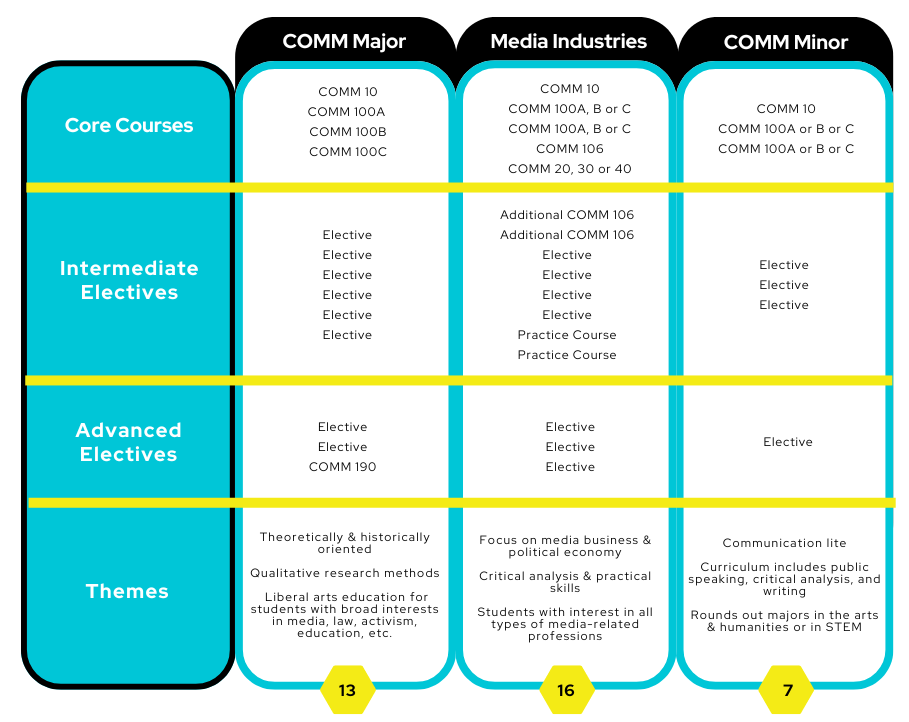
The Department of Communication at UC Santa Barbara offers a Bachelor of Arts in Communication. The major sits in the Division of Social Sciences and is designed to give you a grounding in how messages shape public life, relationships, organizations, and media systems. Students typically enter the major as pre-communication or pre-journalism and declare full standing after completing the lower-division requirements.
Lower-Division Foundations
Before you can declare, expect to complete roughly 8 to 10 lower-division courses. These usually include introductory survey classes in communication theory, research methods, and either interpersonal or media-focused tracks, depending on which pathway you choose. Writing-heavy lower-division work matters because upper-division seminars assume you can read academic articles and produce argument-driven papers.
Upper-Division Core and Electives
Once declared, you will take a cluster of required upper-division courses covering areas like communication theory, quantitative or qualitative research methods, and a capstone-style integrative experience. Beyond that core, the major sheet lists approved elective groupings that let you concentrate in areas such as:
- Media studies and digital culture
- Interpersonal and relational communication
- Rhetoric and public discourse
- Organizational communication
- Journalism (if you entered on that track)
Most students fill their electives from these clusters, but the department also accepts a limited number of outside courses from related fields like sociology, psychology, or film studies when they fit the topic.
Reading the Official UCSB Major Sheet
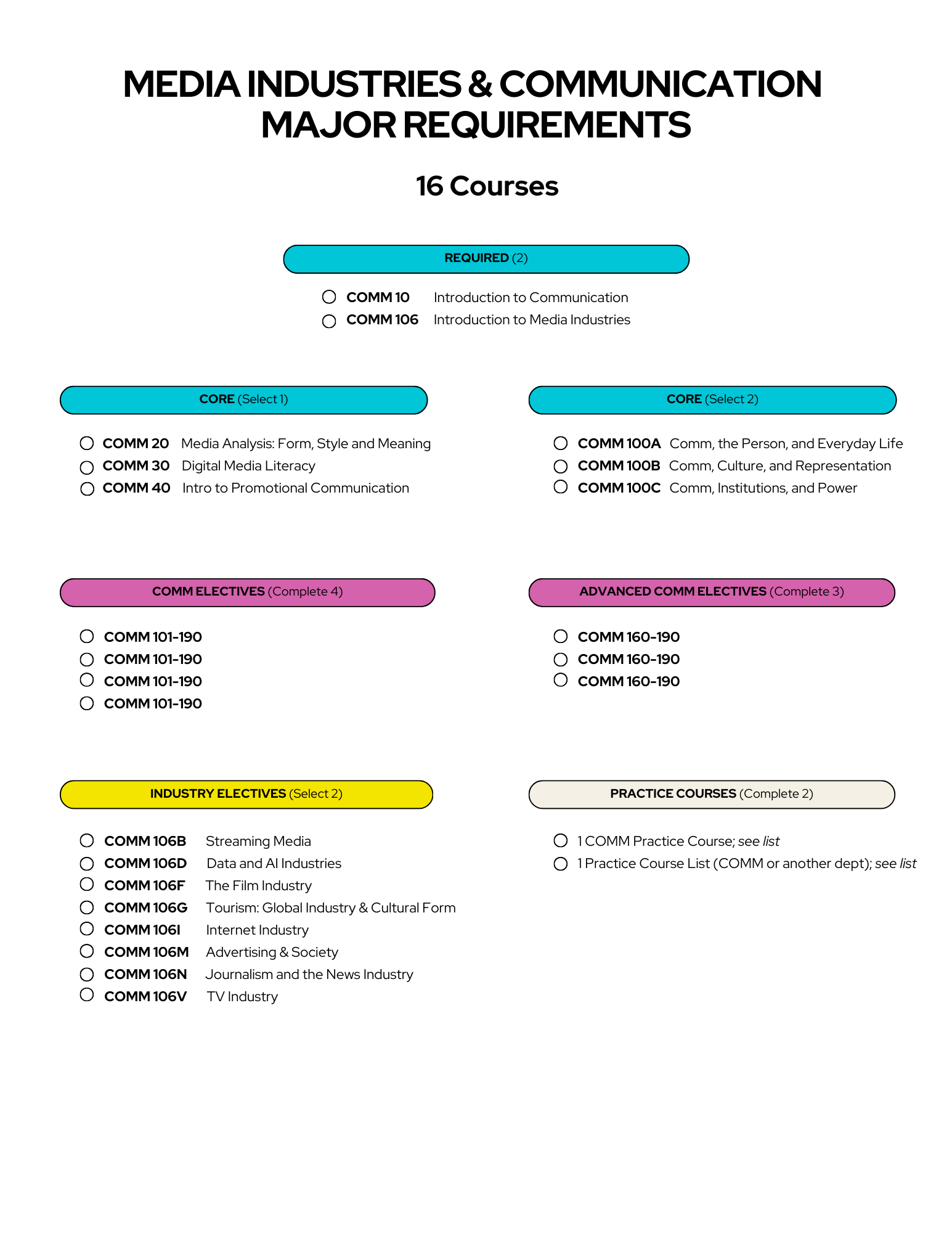
The actual UCSB communication major sheet is a PDF published by the department, usually refreshed each academic year. When you open it, the document is broken into distinct sections. Knowing what each section does saves you time when you sit down to plan.
Section 1: Preparation and Prerequisites
This top block lists the courses you must finish before you can advance to upper-division work. It also flags any grade requirements, such as a C or better in writing classes. If a course is in progress when you apply to declare, the department usually does not count it, so finish first, then file.
Section 2: Upper-Division Requirements
Look for the named required courses here. These are not suggestions; they are the spine of your degree. The sheet will tell you how many units each cluster is worth and which specific courses satisfy it.
Section 3: Elective Lists
Each elective area on the sheet carries its own course numbers. When a course appears on more than one list, double-check whether the department allows it to count for both clusters or only one. This matters most when you are trying to squeeze in a study-abroad class or a one-off special topics offering.
Section 4: University and College Requirements
The major sheet overlaps with American Cultures and Institutions, Writing, and Area requirements that come from the university and your college. Treat the major sheet as the source of truth for major-only classes, and your college's requirements page as the source for everything else.
A Sample 4-Year Plan Using the Major Sheet
The exact plan depends on when you enter UCSB and whether you start as a freshman or a transfer, but the structure below works for most first-year admits who declare on time.
Year 1: Build the Foundation
- Fall: Introductory communication course, Writing 1 or 2 equivalent, American Cultures requirement, a quantitative or data literacy GE
- Winter: Second intro course in your interest area, GE in science or math, start exploring electives you might want to declare in later years
- Spring: Methods-related lower-division class if available, language or area GE, begin thinking about a potential focus area
Year 2: Finish Prerequisites and Declare
- Fall: Last lower-division requirements, plan to file your declaration this term
- Winter: Upper-division theory or methods core, pick your first elective cluster
- Spring: Second upper-division core, second elective cluster, study abroad research if interested
Year 3: Specialize
- Fall: Two upper-division electives in your focus area, GE balance, optional minor coursework
- Winter: Continue electives, consider research assistant or internship opportunities
- Spring: Optional study abroad term, or remain on campus to keep sequencing tight
Year 4: Capstone and Beyond
- Fall: Capstone-style integrative course, remaining electives, career prep
- Winter: Final electives, senior thesis option if available, graduate school applications
- Spring: Buffer term for any outstanding requirements, light load to finish strong
ponytail: this plan assumes 12 to 16 units per quarter and on-time declaration. Transfer students and students with Advanced Placement credit typically compress years one and two.
Common Mistakes Students Make With the Major Sheet
Even careful students slip on the same handful of issues. Avoiding these will keep you from adding extra quarters.
Waiting Too Long to Declare
If you delay declaration past your target window, seats in required upper-division courses can disappear. Declare as soon as you are eligible and adjust later if your interests change.
Counting the Same Class Twice
An elective that appears under two clusters usually satisfies only one. Plan as if each course counts once unless the department confirms otherwise.
Ignoring Prerequisite Chains
Methods and theory courses often have strict sequencing. Skip a prerequisite and you may wait a full year for the next opening.
Forgetting University Overlaps
Some major electives double-count toward GE areas. Use those overlaps strategically to free up space for a minor, study abroad, or a lighter senior year.
Where to Get the Current Sheet and Stay Updated
Always pull the latest version of the major sheet directly from the UCSB Department of Communication website at the start of each academic year. The department updates course lists, renumbers classes, and occasionally retires electives. Bookmark the page rather than relying on a screenshot from a friend or an older Reddit post.
If anything in the sheet looks unclear, the undergraduate advisor in the department is the fastest path to a clear answer. Bring your tentative plan, your unofficial transcript, and a list of the questions you have already worked through on your own. Advisors respond well to students who show up prepared.
Quick Checklist Before You Register Each Quarter
- Pull the current major sheet PDF and skim the changes.
- Confirm prerequisites for every class you plan to take.
- Check that at least one of your classes satisfies a remaining requirement.
- Look for GE or college overlaps to save units.
- Email the advisor only if you hit a true conflict the sheet does not resolve.
Used consistently, the UCSB communication major sheet becomes less of a maze and more of a checklist. Treat it as your single source of truth, refresh it once a year, and revisit your plan with your advisor at least twice during your time on campus.