Washington State Sales Tax Exemption Guide
If you run a business, nonprofit, or qualifying farm in Washington, you may be able to avoid paying the state's retail sales tax on certain purchases. The Washington State Department of Revenue (DOR) administers several sales tax exemption programs, and understanding how they work can save you thousands of dollars a year. This guide explains who qualifies, what purchases are exempt, and how to claim the exemption correctly.
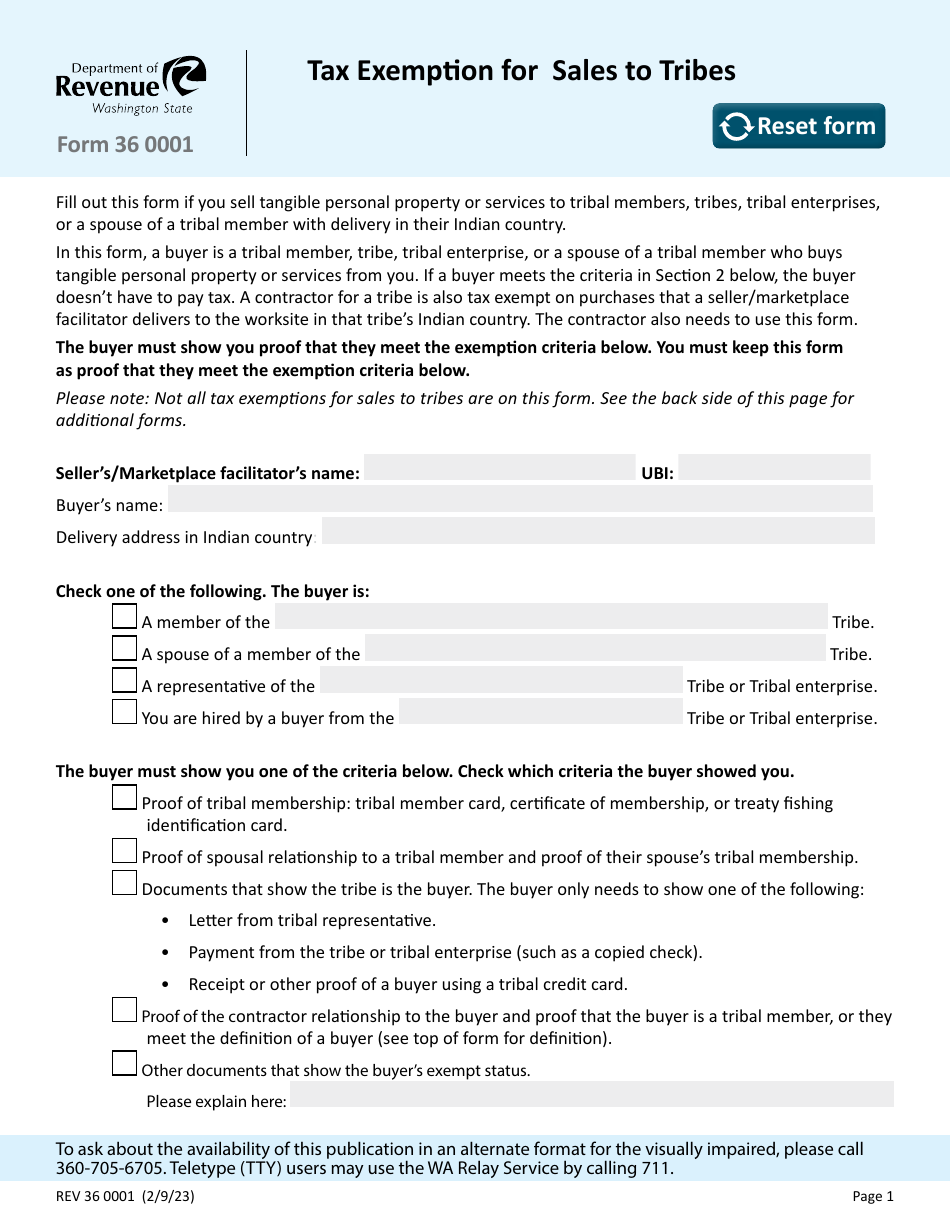
How Washington's Retail Sales Tax Works
Washington imposes a retail sales tax on the sale of tangible personal goods and certain services. The statewide rate is 6.5 percent, and localities can add their own taxes on top of that, so combined rates typically range from about 7 percent to over 10 percent depending on the address of delivery.
Because Washington is one of a handful of states without a personal income tax, the sales tax is a major source of state and local revenue. That is why the DOR takes documentation seriously: every exemption claimed must be supported by a valid certificate, and sellers who accept an invalid exemption can be held liable for the tax.
Who Qualifies for a Washington State Sales Tax Exemption
There is no single "blanket" sales tax exemption for individuals in Washington. Most exemptions are tied to a specific role, activity, or type of purchase. The most common categories include:
- Businesses buying for resale. Retailers and wholesalers who purchase goods to resell can buy inventory tax-free using a reseller permit.
- Manufacturers and processors. Businesses that use machinery, equipment, and ingredients in the manufacturing process may qualify for the Manufacturing Sales and Use Tax Exemption.
- Nonprofit organizations. Recognized 501(c)(3) charities and certain other nonprofits can claim a sales tax exemption on purchases used for their exempt purpose.
- Qualifying farmers and ranchers. Agricultural producers can claim exemptions on items like feed, seed, fertilizer, chemicals, and farm machinery used directly in production.
- Government entities. Federal, state, and local government agencies are generally exempt from sales tax on official purchases.
- Specific industries. Construction contractors working on government projects, semiconductor manufacturers, and certain clean energy projects have tailored exemptions under state law.
The Reseller Permit: The Most Common Exemption
If you buy goods with the intent to resell them, you can purchase inventory without paying Washington retail sales tax. This is done through a Reseller Permit, issued free of charge by the DOR.
To get one, you need an active Washington business license and a Unified Business Identifier (UBI) number. You can apply online through the DOR's My DOR portal. Once issued, the permit is good until you cancel it, but you must renew your business license on time or the permit becomes invalid.
How to Use the Reseller Permit at the Time of Sale
When making a tax-exempt purchase, give the seller a copy of your reseller permit or enter the permit number on a purchase order or invoice. The seller keeps this documentation on file in case of an audit. If you do not provide the permit at the point of sale, you generally cannot get the tax refunded later, so it pays to have the permit handy before you check out.
Keep in mind that the reseller permit only covers items you will resell. If you buy the same product for office use or personal consumption, you owe sales tax on that portion. Mixing personal and resale use of the same item is a common audit trigger.
Nonprofit and Charitable Exemptions
Qualifying nonprofit organizations can apply for a sales tax exemption using the DOR's Nonprofit Application. To be eligible, the organization generally must be a 501(c)(3) or 501(c)(4) recognized by the IRS, be registered with the Washington Secretary of State, and use the purchased items solely for the organization's exempt purpose.
Once approved, the DOR issues a sales tax exemption certificate that the nonprofit provides to sellers. Fundraising events run by the nonprofit may also qualify for a limited exemption on event proceeds, but separate rules apply and depend on how often the event is held.
Unlike a reseller permit, nonprofit exemptions often require periodic renewal or reapplication, so check the certificate's expiration date and keep your documentation current.
Agricultural Sales Tax Exemptions
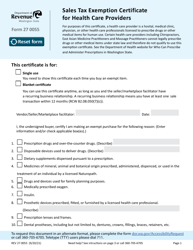
Washington farms, ranches, and orchards can claim a sales tax exemption on many production-related purchases. Covered items typically include:
- Livestock feed and feed additives
- Seed, fertilizer, and agricultural chemicals
- Tractors, implements, and repair parts used in farming
- Baling twine, containers, and packaging for farm products
- Fuel used for agricultural purposes (though separate fuel tax rules may apply)
To claim these exemptions, farmers usually provide the seller with a Farmers' Certificate for Wholesale Purchases or a similar DOR-issued form. Some cooperatives and associations can also file for an annual refund of sales tax paid on qualifying farm supplies.
Manufacturing and Industrial Exemptions
Washington offers targeted exemptions to encourage manufacturing and high-tech investment. The most prominent is the Manufacturing Sales and Use Tax Exemption, which lets qualifying manufacturers defer or avoid sales tax on:
- New machinery and equipment used directly in manufacturing
- Installation labor tied to qualifying equipment
- Computer hardware, software, and peripherals used in manufacturing operations
To use this exemption, the business typically submits a Self-Accreditation Form to the DOR listing the equipment, the manufacturing site, and the planned use. The DOR reviews the application and either approves the exemption or denies it, sometimes with conditions. Equipment that does not qualify is subject to the standard retail sales tax.
Construction work performed for a manufacturer building an eligible new facility may also be exempt under the same program, subject to DOR approval.
Government Purchases and Other Exempt Purchases
Federal agencies, the State of Washington, and most local governments are exempt from retail sales tax when buying for official use. School districts, public hospitals, and tribal governments operating under a valid tribal tax agreement also fall into this category.
Other narrowly defined exemptions include:
- Prescription drugs and certain medical devices
- Food purchased with food stamps (SNAP)
- Some clean energy vehicles and equipment under specific incentive programs
- Goods sold to qualifying international students, diplomats, and consular staff under federal treaties
How to Apply for a Washington State Sales Tax Exemption
The exact process depends on which exemption you are claiming, but the basic steps are similar:
- Confirm you meet the legal criteria for the specific program.
- Obtain any required registrations, such as a Washington business license or 501(c)(3) status.
- Apply through the DOR's online portal or by submitting the appropriate paper form.
- Receive your permit, certificate, or approval letter.
- Provide the documentation to sellers at the time of each exempt purchase.
- Keep copies of all exemption certificates, resale permits, and supporting invoices for at least five years.
Common Mistakes to Avoid
Claiming an exemption incorrectly can lead to back taxes, penalties, and interest. Watch out for these frequent errors:
- Letting permits lapse. A reseller permit tied to an expired business license is not valid, even if the printed copy still looks current.
- Claiming the wrong exemption. Using a reseller permit for items you will use in your own business is a common audit finding.
- Not providing documentation to the seller. Sellers need the certificate on file; without it, they are supposed to charge you tax.
- Missing renewal deadlines. Nonprofit and certain other exemptions expire and must be renewed.
- Forgetting local add-on taxes. A few local jurisdictions impose their own taxes that are not always covered by state exemption certificates, especially in transportation benefit areas.
Getting Help from the DOR
If you are unsure whether a purchase qualifies, the DOR offers a free email and phone helpline for tax questions, and you can submit a written ruling request for more complex situations. Tax practitioners and CPA firms familiar with Washington excise taxes can also help you set up the right exemption certificates and audit-proof your records.
Taking the time to file for the correct Washington state sales tax exemption on the front end is far easier than trying to recover taxes after the fact, and it can make a real difference to your bottom line.